Monday, March 6, 2017

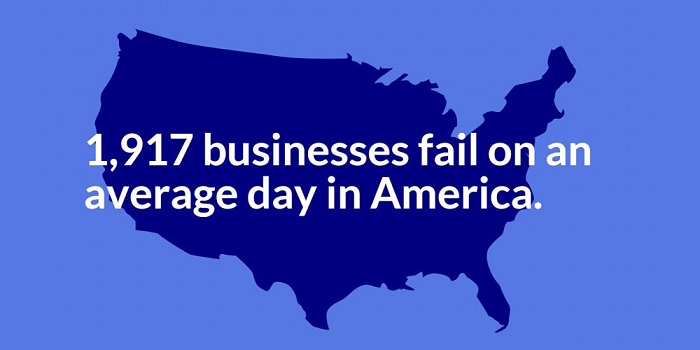
Why are 75% of new businesses doomed to fail?

Luck is often not on the side of the company that has decided to launch a new product or service. Studies show that between 65% and 75% of new proposals are far from successful. Crowdholding solves this by connecting the crowd with businesses in the initial stages of product research & development.


Losses from such statistics are HUGE:. In the US alone in 2010, they amounted to $260 billion, according to Professor Rob Adams (Rob Adams) from the University of Texas. However, these figures should not scare you, when you know the four major pitfalls you can evade to avoid failure.


1. Shock therapy, which does not help too complex productс


If the product is too many "bells and whistles", it would seem quite complex. It is quite possible that customers will not want to use the new functions or to pay for them. It is worth remembering that the functional complexity increases the cost of goods, and the price, as a result, can rise up to heaven.


Recall Fire Phone smartphone that the company introduced the Amazon in 2014. As the largest online retailer, Amazon has increased their annual income to $100 billion over 20 years (which is 30% more than the figures of the world's largest retailer Walmart). Amazon successfully sells a bundle of products, such as the Amazon Kindle e-book reader, etc.
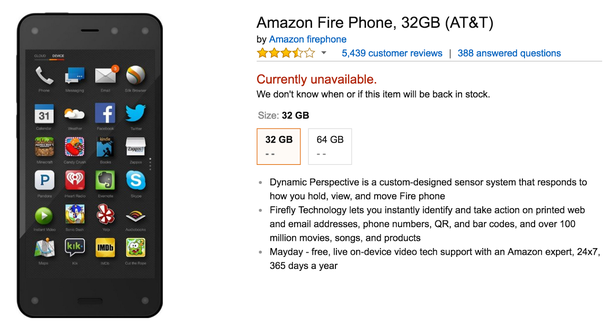
смартфон Fire Phone
Only the Fire Phone was not included in their number. Assuming that this product has to compete with the most advanced offerings, developers have stuffed it with completely unnecessary features. One of them - "dynamic perspective": Pseudo-3D, allowing different content to be visible on the screen depending on the angle of view. However, this effect did not impress consumers as the associated increased battery consumption is clearly a disappointment. Another fly in the ointment is the very limited application ecosystem. If the Fire Phone offer was initially priced at $199 with a service contract or $649 without a contract, in October 2014 the price quickly dropped to 99 cents (!) For the version with the contract AT&T and $450 without a contract. But even this move did not save the smartphone complete fiasco.
A set of many other products also failed in the market. This occurs most often in cases where the development team pays attention only to their offspring and forgets about the clients. To avoid this error, you need to remember the careful segmentation of the customer base (and forget about the traditional demographic targeting).
Crowdholding connects the customers with businesses, allowing companies to pay attention to what version of the product can be offered to different groups of customers, whether each group is willing to pay for it and what are the expectations of consumers.
2. Minimalism, which is not justified: low expectations
The second error is based on the fact that products are created by developers who do not understand how to value their proposals. When it turns out that the product has been underestimated, and customers are willing to pay for it more.
In 2003 the company presented a new Playmobil toy - a “Noah's Ark” (Noah's Ark play). The toy was sold out in two months. At that time it was possible to buy the game on Ebay for 33% more than the original price tag.
Another example of this error was the luxury SUV Audi Q7, launched in 2006 at the price of €55 000. The Audi was planning to sell 70,000 units, but in the first year, the demand was about 80 000. The demand curve clearly indicates that the vehicle must have been priced at €58 000, which would have brought in an additional income of €210 million.


Audi Q7
In addition to the obvious signs like a deficit of goods, what are ways to learn that you have fallen into this trap? Think about it, if only one sales team could easily fulfill the plan for the implementation of a new product. You can experiment with the price and it is quite possible you will get additional income, which was hiding behind this error.


3. Hidden Treasures: products that can not be started


This is the case when products are inspired by the brilliant ideas which are of value to the target audience but are not recognized by senior management. This is often resulting from insufficient communication between the company and customers. Crowdholding does not allow companies to overlook products wanted by the crowd. By connecting the public with companies to co-create, businesses will no longer miss out on such opportunities.


One of the most famous "treasures" concealed by Kodak. In the distant 1970s, a young engineer Steven Sasson (Steven Sasson) invented the original technology underlying the digital camera. However, Kodak «hatched" this discovery for 21 years, as a result, lost a significant market share. Meanwhile, today the digital camera is in every smartphone, and the company declared bankruptcy.


Hidden treasures are found in today's business almost as often as the first two errors. Top management is blocking them, because of being afraid to lose reputation or not understand the market potential.


There are several conditions that help to discover hidden treasures. This occurs most often during the changes and reorganization of the company. For example, when adjusting the business model, the transition from offline to online sales, from analog to digital products or from hardware to software. It is necessary to consider every opportunity which came to light during these changes. Otherwise, your "treasure" will be presented by competitors.


4. Walking Dead


In science fiction, those who have already died and then came back to life are called zombies. However, these creatures live in the world of business. Zombies - those products that "died" after entering the market or have been released already dead. This is a response to a question that no one asks or a wrong answer to the actual question.


Segway as a form of personal transport - one of the most famous zombie products. In the first year (2001) have been sold far less than the 50,000 units sold (this figure predicted by its inventor). Segway though is an attractive way to travel on the sidewalk, but its price is too high - from $ 3000 to $ 7000.


Google Glass is also an example of a zombie product. The headset is made in the form of conventional glasses, it was intended to be a smartphone in a new guise. The product appeared on the market in 2012, worth $1500 and answered a question, which none of the customers asked. In 2015, Google announced the end of sales of the gadget.


Google Glass
Sometimes companies and innovators are so focused on their designs that create a new reality, not taking into account the laws of the market. Zombie-products appear in cases where developers overestimate their attractiveness for customers and segment the customer base. If they take into account the opinion of customers and their (un) willingness to pay for the product at the beginning of the development process, it could be time to correct course, to change the price or even give up the idea before you invest a lot of time and resources into it. That is exactly what Crowdholding is doing by connecting the crowd and businesses at the initial stages of product research & development.
How to avoid mistakes?


The most important aspect in the development of a new product is to discuss pricing policy involving target customers long before the moment when the team begins to prepare technical plans. These discussions must focus on the precise definition of the functions that customers really care about, and the price they are willing to pay.


Ironically, 80% of companies do not include such discussion in its business practices in the early stages of product development. It was found out during a survey conducted in 2014, involving 1,600 companies in more than 40 countries around the world. In fact, they are just developing a product, releasing it to the market, while the price is adhered to the end of the process, unaware if it is worth the effort and whether customers will pay. These companies are looking to monetize an idea without any real evidence that this is possible. This is the best recipe for failure, and this is the reason for the failure of two-thirds of new products.


Have you got something to add to our story? We, at Crowdholding, are happy to hear your feedback. Learn about Crowdholding in 1 minute by watching our Youtube video.


Sunday, March 5, 2017

Trends 2020: Crowd Currencies?

What are Crowd Currencies?

Internet Technology has enabled everyone to access every kind of information with just one click. Earlier it was not an easy job to do monetary transactions from one back to another or from one part of the world to another. However, using Software technologies and Internet Technology, with the help one single click, money can be transferred and collected within a minute. One such currency is Crowdshare offered to the crowd in exchange for their ideas and feedback.
Nowadays people have started businesses using internet technology. The e-commerce industry is progressing at a rapid pace. Ebay, Amazon.com and likewise are the biggest example of this kind of business. So a business can’t be done without monetary transactions and if someone is doing e-commerce-based business then how will he do monetary transactions? One method is to use an intermediate financial institute like any Bank. Another method which is very common nowadays is using bitcoins. Bitcoins are also known as Internet money or digital money. Crowdshare has its conversion rate. Once the crowd share is entered, it will convert to its exchange rate with a dollar and then from a dollar to the currency of the individual receiving that money. So digital experts have devised a term for crowd share and such kind of things, known as Crowd Currencies.
Sharing economy is a term which is used to describe a situation where one can access and use the shared human resources without conducting monetary transactions. Still sharing economy model don’t bound the monetary transactions. Keeping this in view, the concept of crowd currencies has been evolved. Crowd currencies are also one of the applications of this concept of sharing economy. The reason is that bitcoin technology can be accessed by anybody working on any online platform. Banks and other financial institutes also facilitate the transaction of bitcoins. The process is very simple, the person who want to deal in bitcoins on any e-commerce platform. He just needs to purchase bitcoins at an exchange rate of dollars using his bank account. After that those bitcoins can be used to do shopping on the internet. Such kind of facilities has been termed as Initial Coin Offering (ICO) by internet economy experts.
Let’s have a look at some of the advantages which ICO, bitcoin and crowdshare system provides. The 1st and foremost benefit which it provides is that it allows you to generate the required finance for any new project. It is easy to transact the money from the stakeholders working in a different locality, by using Bitcoin. Next, this is very helpful for those businesses which are small or starting their ventures. Crowdshare system in Crowdholding allows them to reach their target customers directly. These startups can promote their online businesses and ultimately it will help to reach the customers and customers might use it to buy the products.
One disadvantage which has been faced by ICO is that lack of trust. Generally, the e-commerce businesses have been facing the problem of trust. Customers want to spend a big amount of money on a product which they can feel and see in front of his eyes. So the customer may get reluctant to purchase and use ICO, bitcoin or crowdshares.
ICO, bitcoins, and crowdshares are modernized form of currencies. They have been used all over the world, particularly on online forums. Still, it needs some time to capture the entire market because a customer is the ultimate reality of any business. The trends may get change at any moment, so this industry must be ready to face any kind of change in trends, mind, and hearts of customers.
We are interested in your opinion and feedback regarding the crowdholding concept. Get in touch through our website or email us at hello@crowdholding.com Learn more about Crowdholding in 1 minute by watching our Youtube video.

Friday, March 3, 2017

Unprecedented Innovation ignited by Mass Collaboration


Teamwork is probably the most common practice which we see at different phases of our life at different occasions. No matter if you are working in an office on a deal, working on your university project, managing any event and likewise, everywhere you need a perfect team to carry out that work. Gather or join a team on Crowdholding and collaborate with people just like you.
Even at your home, you need a collaborated effort with your family to run your home in an efficient manner. So when a group of people works together to carry out any project while collaborating with one another is known as Team Collaboration. Life is full of ups and downs and at any stage of the project, a team member might face any personal trouble, then it will affect the efficiency of the project. Thus considering such kind of difficulties, business experts devised out a new concept known as Mass Collaboration. According to it, a project is divided into its modules and bits of each module are assigned to different team members who work independently.
Information Technology has opened barriers of communication which were faced people a few decades ago. Furthermore, internet technology is a big advancement in this industry. Nowadays, there are several websites and software are available which can be used as a medium of communication. Skype, Facebook, WhatsApp are all examples of mediums of communication. Nowadays, in corporate sectors, usage of such software has increased to a great extent. These mediums are used for virtual communication by team members to collaborate with one another. Inter-organizational, inter-departmental and inter-team communication used another name in their jargons list to name these tools which are Collaboration Tools.
Mass collaboration is different from the old organizational concept of Mass cooperation where it was essential of all teammates to gather at one single place to carry out any project. On the other hand, modern day organizations have started to inject the concept of Mass collaboration. Its purpose is to empower their marketing personals. For example, joining crowdholding with an idea for the new product line and collaborating with the crowd to co-create it. Furthermore, by following Mass collaboration marketing company of the consumer goods is allowing their employees to keenly analyze and to eradicate all those processes which are reducing the efficiency of the organization. So this will allow the organization to be more innovative and ultimately will increase the sales of the organization. The business potential of mass collaboration is increasing day by day because of the efficiency it provides to the employees. The employees manage their time for online communication but after that, they use to do work according to their spare time. The concept of Freelancing has also arrived from the concept of Mass collaboration. Nowadays, a freelancing industry is growing at an enormous pace. Students & professionals are earning a lot of money through freelancing. And on Crowdholding, they can now also get a gig or work part-time on revolutionary startups. Rather a majority of the people have started their part-time business through Freelancing platforms.
The concept of Mass collaboration is a great development in the business world. Collaboration tools usage has also increased. This collaboration has opened the doors of many other business ideas. Mass collaboration is the need of the hour for the modern day organizations who needs to collaborate among their branches at different locations.
We are interested in your opinion and feedback regarding the crowdholding concept. Get in touch through our website or email us at hello@crowdholding.com Learn more about Crowdholding in 1 minute by watching our Youtube video.

Thursday, March 2, 2017

Alternative Finance: Crowdholding

Equity vs Crowdshare Crowdfunding
It is very important to know about the details of alternative finance options so that they can find the right option for the investment in their company. There are many financial terms that the common man must understand to get the maximum benefit out of his small company. In this Crowdholding article, we are going to tell you about some of the major alternative finance options that are equity based sharing and crowd share crowdfunding.
In general, equity means that the company or startup provides shares of ownership to the investor in having a deal with him that he will invest the money in your firm. While on the other hand, the Crowdshare or revenue based sharing is also done. In this type of investment, the investor does not get any ownership right of the company but he is involved in sharing operating profits. This is done as a deal on return on investment.
Having huge capital resources is the basic need of the startups and similarly, they also do not want to waive their ownership rights at any cost. In such circumstances, the revenue sharing investment deal is the best alternative to get the financing for the company to meet the needs. The revenue sharing program never demands to be dependent on investors nor it risks the personal assets as collateral that is often done while taking loans.
Crowdfunding is the act of subsidizing a venture or wander by raising money from a large number of people. Crowdfunding is a type of crowdsourcing and of alternative finance. In 2015, it was evaluated that worldwide over US$34 billion was raised this way.
In spite of the fact that the idea can likewise be executed through benefit event,  mail-order subscriptions, and different strategies, it is currently frequently performed by means of Internet-intervened registries. This advanced crowdfunding model is by and large in view of three types. These three types include the groups or individuals who support the idea, the project initiator that is the one who has initiated the project and the third one is the moderating organization that provides a platform through which the two parties can have a deal.
Further, the crowdfunding is also divided into equity-based crowdfunding and nonequity based crowd funding. The equity crowdfunding is similar to the equity based investment in which few percentage of ownership rights is shared with the investors in return for the capital and nonequity based crowdfunding is based on some type of reward in return on the investment. This reward could be of multiple types depending upon how the deal is done.
Profit sharing and revenue sharing based investment is the best alternative finance options available for the small businesses. In this way, the start-ups and the investors both get the things they wanted to have.
We are interested in your opinion and feedback regarding the crowdholding concept. Get in touch through our website or email us at hello@crowdholding.com Learn more about Crowdholding in 1 minute by watching our Youtube video.

Tuesday, February 28, 2017

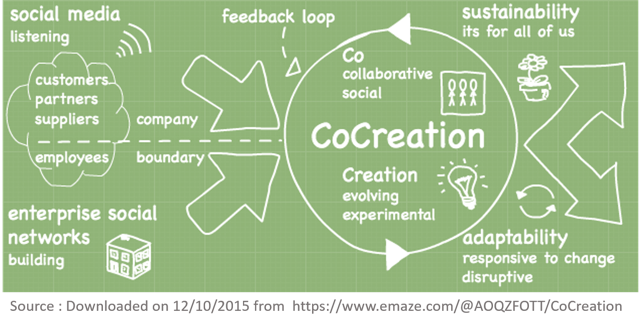
How do IT and Co-creation complement each other?

How do IT and Co-creation complement each other?


It is anything but simple to explain the relationship between IT (information technology), small businesses and the Co Creation Phenomena. But there is no doubt that they have been really helpful for the growth of small businesses over the years. Crowdholding combines all three connecting the crowd and entrepreneurs to co-create, allowing them to give feedback and ideas for future revenue. In this article we will try to explain this topic the best we can, by doing some references to many articles related to this matter.

During the 1990s, notions of the extended enterprise and the boundaryless organization encouraged managers to broaden their search for efficiencies and discover ways of creating value from their supplier network and beyond. Starting in 1995, the Internet further invigorated the corporate pursuit of efficiency, this time expanding it to include all the activities directly involving or affecting the company–customer relationship. Still, throughout this evolution, the assumption that internal cost efficiency is the source of value creation has remained unchallenged.

CO CREATION PHENOMENA

How do companies co-create valuable experiences with consumers?

The traditional company-centric view says: (1) the consumer is outside the domain of the value chain; (2) the enterprise controls where, when, and how value is added in the value chain; (3) value is created in a series of activities controlled by the enterprise before the point of purchase; (4) there is a single point of exchange where value is extracted from the customer for the enterprise.

The consumer-centric view says: (1) the consumer is an integral part of the system for value creation; (2) the consumer can influence where, when, and how value is generated; (3) the consumer need not respect industry boundaries in the search for value; (4) the consumer can compete with companies and small business for value extraction; (5) there are multiple points of exchange where the consumer and the company can co-create value.

In the customer-centric mass production and marketing of automobiles, for example, suppliers provide raw materials, components, subcomponents, and systems to manufacturers, who create value by assembling these inputs into vehicles. Consumers actively decide what vehicle to buy, but companies decide what their choices will be. Cars are sold by dealers acting as intermediaries for the automakers. For companies reliant on this scenario, value creation is defined solely by extracting profit from end consumers.

Consumers appreciate and expect efficiency when it improves their experience with a product or service. But most of the time, managers are so preoccupied with operating efficiently that they don’t even think about value in terms of the consumer’s experience. (See Exhibit 1.) Ask yourself: Do you as a consumer of a digital camera think about the complex sourcing patterns and logistics that the manufacturer has to deal with, or are you thinking about the fun you will have when you bring the camera to the beach to record your children’s first ocean swim?

Because companies have historically controlled all business activities involved in the co creation of the things they sell, it is their view of value that is dominant. Indeed, the consumer typically has little or no influence on value created until the point of exchange when ownership of the product is typically transferred to the consumer from the firm. This is true whether the consumer is a company or an individual.

Now consumers are challenging this corporate logic of value creation. Spurred by the consumer-centric culture of Crowdholding — with its emphasis on interactivity, speed, individuality, and openness — the consumer’s influence on value creation has never been greater, and it is spreading to all points in the value chain. (See “The Five Powers of the Connected Consumer”)


The 3 Powers of the Connected Consumer and information technology

Before the Internet liberated information technology, companies could do everything — choose materials used in products, design production processes, craft marketing messages, control sales channels — with no interference. Now, consumers exercise their influence in every part of the business system. Nevertheless, companies should welcome, not resist, the consumer powers detailed below.

1. Information Access.
With access to unprecedented amounts of information, consumers have the knowledge to make much more informed decisions. This is causing companies across industries to cede control over value creation and develop new ways of doing business. Consider health care. More than 70 million Americans have reportedly used the Internet to learn about diseases and treatment options and investigate how to get involved in clinical drug trials. Consumers now question their physicians more aggressively and participate more fully in choosing treatments. This is dramatically altering traditional pharmaceutical sales practices. In the U.S., it is driving consumer-centric “defined-contribution” health-care reform wherein companies give employees information and ask them to assume more responsibility for selecting and managing their own health-care benefits.

2. Global View.
The Internet is the first single source of information that gives consumers the ability, 24 hours a day, to see what is happening around the world. That is changing the rules for how companies compete. For example, multinationals are more exposed to consumer scrutiny of product price and performance across geographies, which means those businesses have less latitude to vary the price or quality of products sold in multiple regions. But it also means companies have more information to sharpen global strategies. New competitors and potential partners for large companies are also emerging in the global marketplace. Even poor artisans in Rajasthan, India, can sell high-quality table linen on the Web for $10 and deliver it to buyers in the U.S. in about a week, and for one-tenth the cost of comparable linen in the United States.

3. Networking.
Consumers naturally coalesce around common skills, interests, and experiences. The Internet amplifies this by encouraging an unparalleled ease and openness of communication among perfect strangers. Indeed, “communities of interest,” where individuals confabulate and commiserate without geographic constraints and with few social barriers, exist all over the Web. People participating in a chat area may know nothing more about those they’re chatting with than the interest they share. The power of consumer networks is that they’re independent and based on real consumer experiences, not what the company tells them they will experience.

Have you got something to add to our story? We, at Crowdholding are happy to hear your feedback. Learn about Crowdholding in 1 minute by watching our Youtube video.

Monday, February 27, 2017

Corruption on Wall Street: The Stolen American Dream

Corruption on Wall Street: The Stolen American Dream


It is a commonly perceived notion that corruption exists because of a prevalence of corruption amongst politicians, however, corrupt governments only breath because they are receiving a constant supply of oxygen through corrupt institutions. Be an engaged citizen and help Crowdholding to raise awareness and make a stand against Wall street. Watch a 1-minute video to understand how.


Most of the US citizens do believe that there is existing corruption in the financial system, but they do not have the accurate approximation of corruption due to the lack of an idea about the corrupt institutions propagating corrupt financial structures. One of the key player in stealing the American Dream is Wall Street and its prevailing corruption, and if you want to know how wall street is corrupt read below for 5 reasons why Wall Street investment practices are becoming fraudulent:
Price Manipulation:
Price manipulation is a known corrupt investment practice and several whistle blowers came forward with evidence suggesting that investment institutions in wall street have openly been manipulating gold and silver prices and regulators are not doing anything about the corruption.
Lack of Accountability
The accountability and transparency regulations to hold corrupt officials of wall street accountable are becoming increasingly weaker. For example, Joe Cassano who was responsible for bringing down AIG was never prosecuted for his corrupt practices.
Back Door Deals
Companies with ties to the US government have openly been making back door deals that are against their clients’ interests, however, those companies are functioning freely without any consequences and one such example is the corrupt practices of Goldman Sachs.
Accounting Tactics
It is believed that major banks of wall street are employing accounting tactics to hide the size of their balance sheets at the end of reporting periods, to avoid tax and legal implications. But is the government doing anything about it? Well, not that we have heard of.
Invasion of Privacy
Credit card companies are believed to be employing invasive data mining techniques to predict their clients’ behavior. Invasion of privacy of clients is unlawful, especially if they don’t know about it. However, it seems like we don’t much about our privacy invasion but the regulatory institutes sure do, but the biased favor given to wall street bankers by the corrupt government practices is giving the freedom of corruption to wall street institutions and there is a need for effective regulation.
Wall Street bankers have been able to earn huge sums of money through corruption and fraud due to the lack of accountability and transparency in the system. The corrupt values and tainted practices of wall street and corrupt government need to be regulated, and one of the ways to do that is to inform the general public on how their American Dream is being stolen without them even being aware of it.
Be an engaged citizen and help Crowdholding to raise awareness and make a stand against Wall street. Watch a 1-minute video to understand how.

Sunday, February 26, 2017

Year 2020 in Crowdsourcing


Over the past few years, crowdsourcing has become very popular especially for small businesses. It is basically a new type of a work process. You gather people in the form of a crowd to help you with a task which otherwise would have been performed by a single employee. Crowdholding connects the crowd and small businesses to co-create and share revenue.
It is a very goоd means of marketing today. For instance to make a company logo small business do not require to hire an agency, a freelancer or an in-house fashion designer. Instead, by using crowdsourcing they can post according to their needs and then many designers will compete to create a custom logo for your company. Crowdsourcing today is not only used for the purpose of simple graphic designing. It now has four different categories such as Microtasks, Crowdfunding, Macrotasks and Crowd Contests. The Internet and public websites are a great help in ensuring effective crowdsourcing technique. These include Wikipedia and IMDB on the top list.
Following are some of the top future trends in the crowdsourcing(Crowd Economy) to look upon as Crowdsourcing continues to gain momentum.
Firstly, curated crowds may not always mean that they will give your better output with crowdsourcing. In the earlier stage of crowdsourcing design websites, it was evident that crowdsourcing groups with large crowds delivered average outputs. The greater there is the variety of different designs available, the more difficult it would be for you to sift out the bad designs. Crowdholding deals with this by allowing the crowd to vote on the best ideas.
Moreover, as crowdsourcing is being greatly used for Microtasks various quality control mechanisms are added on the top of basic input and output level to ensure success. This will also lead to high levels of accuracy.
Crowdsourcing has not yet become an industry; rather it is one form of an undefined space. Work is being now done to standardize it and define its space bounds. Popular groups such as the Crowdsortium are the real players discussing the changes required in crowdsourcing now. Suggestions are coming in the trade association and the leaders working to define the official taxonomy of crowdsourcing. All these efforts will ensure a healthy future of crowdsourcing.
Corporate owners who have just entered the entrepreneur world are also adopting crowdsourcing. So, crowdsourcing is not at all bad for early adopters. Large corporations which use Crowdsourcing include General Electric, PepsiCo, Procter and Gamble, and Amazon. Other companies will thus be able to adopt crowdsourcing. Eventually, Crowdholding makes sure that small businesses will find it easy to adopt it as well.
Though with every passing year crowdsourcing use is increasing but still it's in an early adoption phase. Very few people across the globe know the real potential of crowdsourcing.
The top three trends in the crowdsourcing are stress crowd-currencies, customer co-creation, sharing economy. With the growing popularity of crowdsourcing crowd, currencies are also greatly used now. It also leads to customer co-creation which is beneficial for business in many ways. Crowdsourcing is playing a great role in leading to a sharing economy. Similar to as what You Tube did to TV and blogs did to traditional media peer to peer sharing trend is becoming very popular and a major disruptive force. In a few year, it will create many winners and losers. Therefore, in all ways, Crowdsourcing is a great networking marketing tool with growing potential.

Learn more about Crowdholding in 1 minute. Watch this Youtube video.